The primary difference between screened vs unscreened topsoil lies in their processing methods. . Screened soil has passed through a mesh that removes material larger than the openings, while unscreened soil is sold closer to its excavated state. Choose screened material when you need a surface that is easier to rake, level and plant. Unscreened material may suit rough landscape build-up where finish is not important, but neither label tells you everything about soil quality.
What Is Screened Topsoil?
What is screened topsoil? It is topsoil run through a mechanical screen so smaller particles pass through while larger stones, roots, sticks and clods are separated out. The exact result depends on the screen opening and the condition of the soil when processed.
That is the practical screened topsoil meaning: a more consistent, workable material, not a different soil type. It is usually easier to shovel, spread and grade for lawns and planting areas. It may still contain small stones, roots or other material that can fit through the screen.

What Is Unscreened Topsoil?
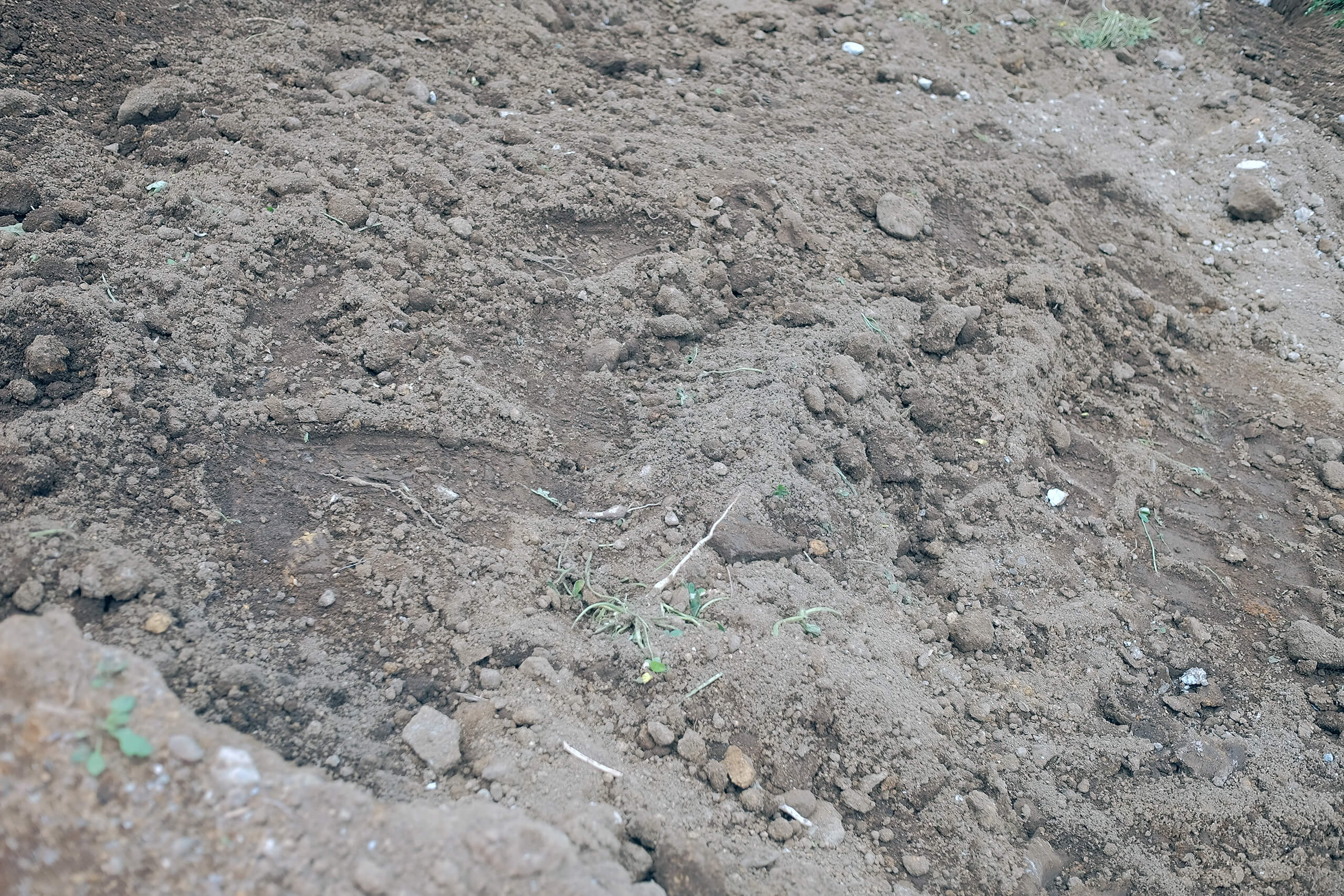
Unscreened topsoil has not gone through that sizing step. Its composition can be similar to the source material used for screened soil, but larger clods, stones, roots and plant matter may remain. That can mean more hand sorting and raking before the surface is ready for seed, sod or planting.
In a screened vs unscreened topsoil comparison, “unscreened” does not automatically mean poor soil. It means the material is less processed and can be less predictable to handle. It may be practical for non-structural landscape build-up that will be covered, provided some settling and a rougher finish are acceptable.
Screened vs Unscreened Topsoil at a Glance
| Feature | Screened topsoil | Unscreened topsoil |
|---|---|---|
| Processing | Passed through a mesh | Not screened |
| Texture | More consistent | More variable |
| Oversized material | Much of it removed | More likely to remain |
| Work required | Easier to rake and level | More sorting and breaking up |
| Common fit | Lawns, garden beds, finish layers | Rough, non-structural build-up |
What Screening Removes and What It Does Not Guarantee
A screen separates material by size. It can remove much of the oversized stone, woody debris, roots and compacted clods, but anything smaller than the openings can pass through. Screen size can vary by supplier, so “screened” does not promise a perfectly fine or stone-free product.
When weighing screened vs unscreened topsoil, remember that screening describes processing, not growing performance. It does not guarantee a particular sand, silt and clay balance, organic matter level, pH, nutrient content or freedom from weed seeds and contaminants. Ask to inspect a current sample when possible because bulk material can vary.
Choose Topsoil Based on the Job
For a new lawn or topdressing, screened soil is generally the more workable choice because it can be raked into a smoother layer. Our guide to preparing topsoil for a new lawn explains the steps that follow delivery, including spreading, grading and preparing for seed or sod.
For raised beds and gardens, workability still matters, but fertility and drainage matter too. Iowa State University Extension describes raised-bed soil as a mix that can include topsoil, organic matter and coarse sand, rather than relying on the word “screened” alone. Our raised-bed soil guide explains how screened topsoil and added organic matter can serve different roles.
For builders and landscapers, the choice between screened and unscreened topsoil often comes down to whether the material will be the visible growing layer. Do not treat topsoil as structural fill beneath slabs, driveways or other load-bearing work. For those applications, ask whether fill dirt or another compactable aggregate is appropriate.
Questions to Ask Before Ordering
A good screened vs unscreened topsoil decision starts with a few practical questions:
- Has the material been screened?
- Is it straight topsoil or a blend with compost, manure or sand?
- Can you see a current sample?
- What amount do you need, and can the delivery vehicle access the drop location?
- Does the material suit your project?
Screened vs Unscreened Topsoil FAQs
Is screened topsoil free of weed seeds?
No. Screening removes material according to size, but weed seeds and small plant fragments may still pass through. Screened topsoil should not be treated as weed-free unless a supplier can support that separate claim.
Does screened topsoil mean better-quality soil?
Not automatically. Screening usually creates a more consistent texture and removes much of the oversized debris. The original soil still determines characteristics such as texture, organic matter and nutrient content.
Can unscreened topsoil be used for a lawn?
It can be used, but preparing a smooth seed or sod surface may require considerable sorting, breaking up and raking. It is usually the more practical option to go with the screened option.
Summary
Screened vs unscreened topsoil is mainly a choice about particle size, workability and intended use. Screening can make soil easier to spread and finish, but it does not prove fertility or suitability for every project. For lawns, planting beds and finished landscape surfaces, Our screened topsoil is a practical starting point. Inspect the material, plan for any amendments your plants need, and contact us for a quote or help estimating your order.