If you are planning a new lawn, patio, garden bed, shed pad, or other yard project, tree stump removal is usually the better long-term choice. Stump grinding is faster and often less disruptive at first compared to removal, but it leaves the root system and buried wood in place. Full stump removal takes more work because the stump and major roots are excavated, but it gives you a cleaner area to backfill, level, compact, and reuse.
The right choice depends on what you want to do with the space. If the stump is in a corner of the yard and you only need the visible trip hazard gone, grinding may be enough. If you are preparing the area for landscaping, sod, hardscaping, construction, or proper grading, full tree stump removal is usually worth considering.
What Stump Grinding Does
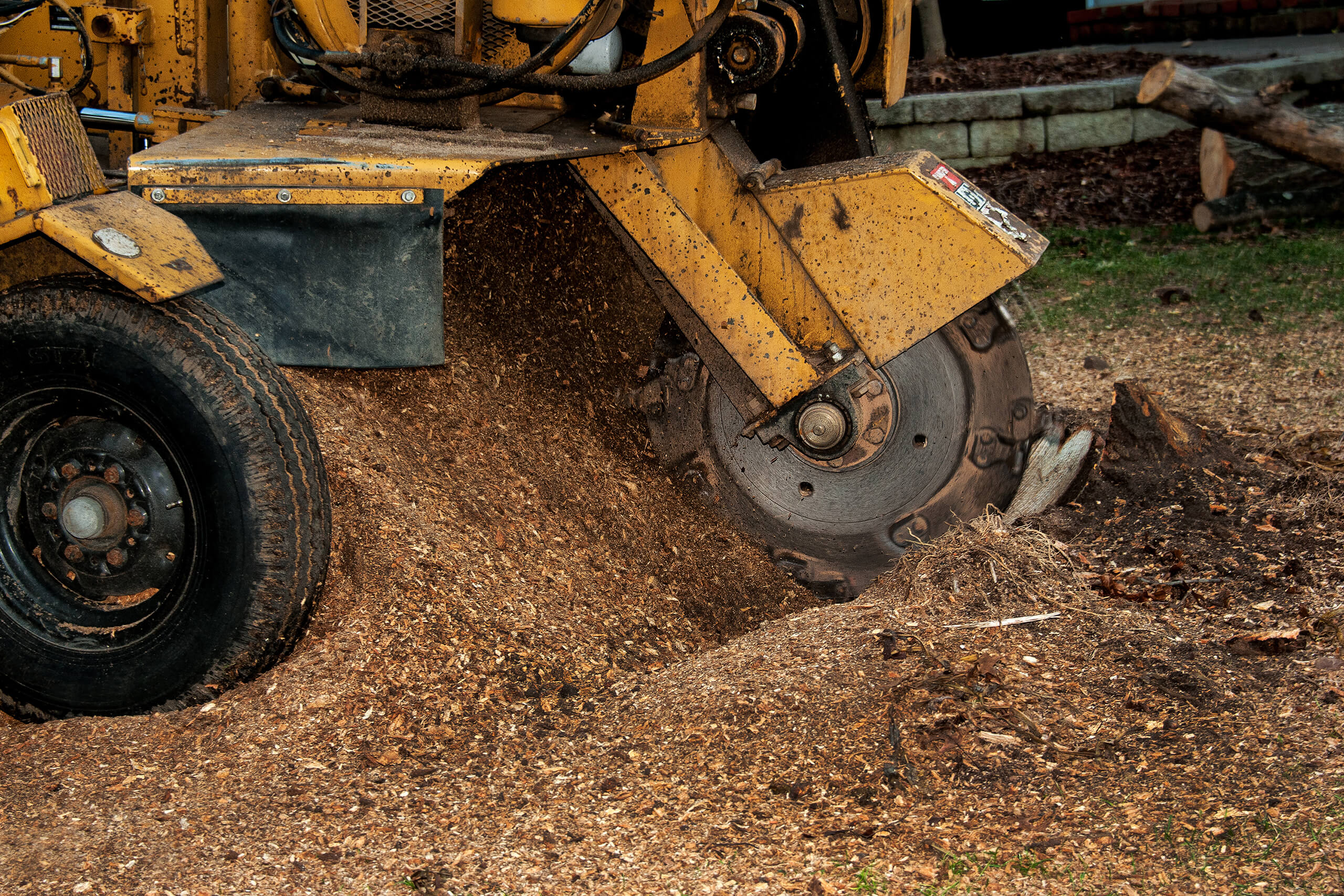
Stump grinding uses a machine with a cutting wheel to grind the visible stump into wood chips. Many grinders work below the soil surface, so the stump can be covered with soil and hidden from view. Grinding commonly leaves a large pile of wood shavings, and those shavings are ideally removed before topsoil is added and the area is replanted.
The main drawback is that stump grinding does not remove tree roots throughout the surrounding soil. Larger roots and buried wood are left to decay over time. That can be fine for a low-use planting bed, but it can create uneven settling when the area is being turned into lawn, patio base, walkway, gravel pad, or a compacted landscaping surface.
What Full Tree Stump Removal Does
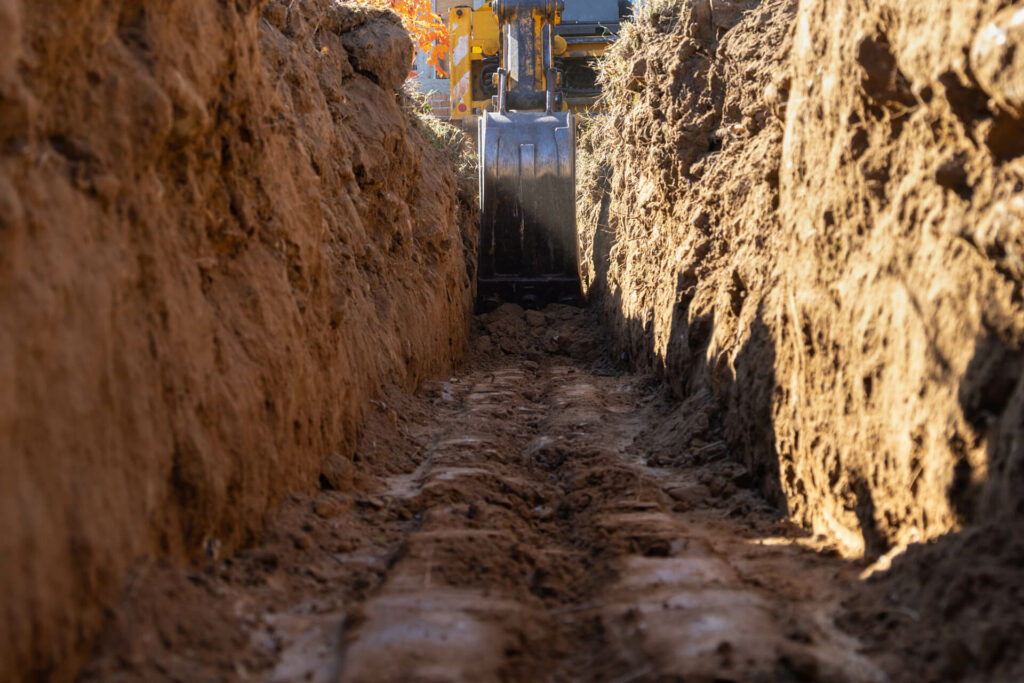
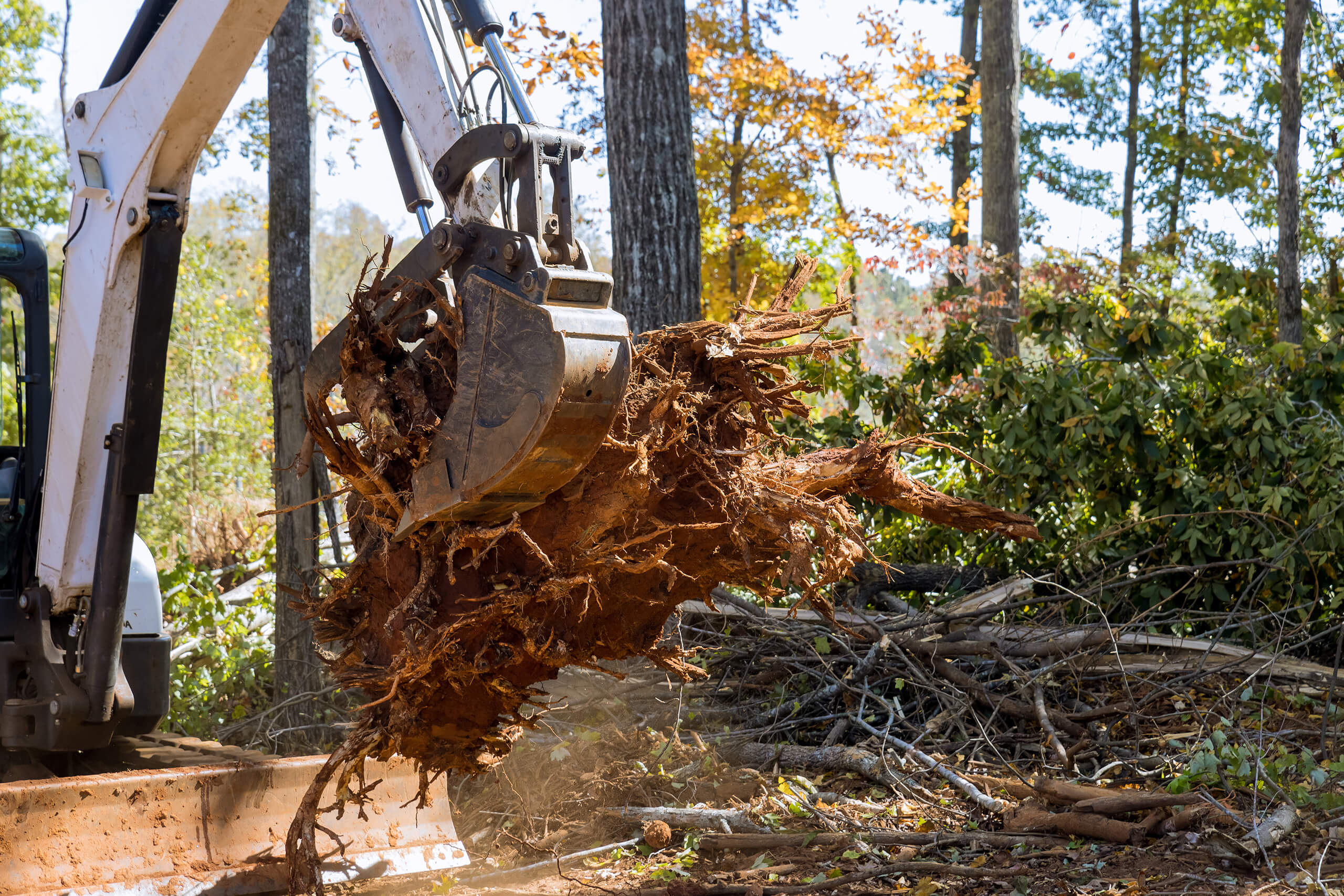
Tree stump removal means digging out the stump, root ball, and major roots instead of shaving the stump down in place. The result is a larger hole, but that hole can be backfilled with appropriate material, levelled, and prepared for the next use.
That difference matters before landscaping. When you remove tree roots and the main stump mass, there is less buried organic material left to shrink, rot, or create soft spots. You also get a better look at the soil conditions under the stump, which helps with backyard site prep if drainage, grading, clay soil, or a future base material is part of the project.
Stump Grinding vs Removal: Which Is Better for Your Project?
For simple cosmetic cleanup, stump grinding can be a practical option. It is typically quicker, it avoids a large excavation, and it can leave mulch-like chips that may be useful elsewhere in the yard. If you are not building, grading, paving, or planting anything important in that exact spot, grinding may solve the immediate problem.
For most landscape preparation work, tree stump removal is the stronger long-term choice compared to grinding. It is better when the area needs to become a smooth lawn, a patio, a retaining wall base, a shed pad, a gravel feature, or a space where future settling would be frustrating. Tree stump removal is also better when the stump is large, close to the planned work area, or surrounded by roots that would interfere with excavation, levelling, or compaction.
Why Grinding Can Cause Problems Later
The issue with grinding is not that it never works. The issue is that it can make a yard look ready before the ground is actually ready. Wood chips mixed into soil can affect moisture and nutrient balance, and remaining roots can leave low spots as they decompose. If you lay sod, place patio blocks, build a walkway, or install a gravel base over that area too soon, you may be dealing with sinking or uneven surfaces later.
Grinding also does not always stop regrowth from species that sprout aggressively from roots or remaining living tissue. Full tree stump removal gives you a cleaner start because the main stump material is gone, the major roots can be addressed, and the area can be rebuilt intentionally instead of patched over.
Backfill, Levelling, and Compaction Matter
A stump hole should not simply be filled with loose topsoil and forgotten, especially if the area will support a patio, walkway, gravel pad, or equipment traffic. The right backfill depends on the future use. Lawn and garden areas may need quality soil near the surface, while structural or hardscape areas may need compactable material below the finished layer.
For planting and lawn repair, topsoil can help restore a growing surface. For patios, pads, and other firm bases, the site may need different aggregate or fill material under the surface. The important point is to match the backfill to the project instead of treating every stump hole the same way.
Do Utility Locates Before Digging
Because full tree stump removal involves excavation, utility locates matter. Dig Safe Sask says Saskatchewan projects that may impact a utility line require a line locate before work begins, and homeowners should plan ahead before ground disturbance. This is especially important for backyard site prep near alleys, garages, sheds, fences, gas lines, power, communications, irrigation, or older utility routes that may not be obvious from the surface.
A proper locate does not make every dig simple, but it helps the contractor plan the job safely. It can also influence whether excavation, hand digging, hydrovac work, or a different approach is needed around marked lines.
How to Prepare the Area After Stump Removal
After tree stump removal, the area should be cleaned of large wood pieces, loose debris, and unsuitable soil. From there, the hole can be backfilled in layers so the material settles properly. If the area is being turned into lawn, the final layer should be shaped to match the surrounding grade and topped with suitable soil for seed or sod.
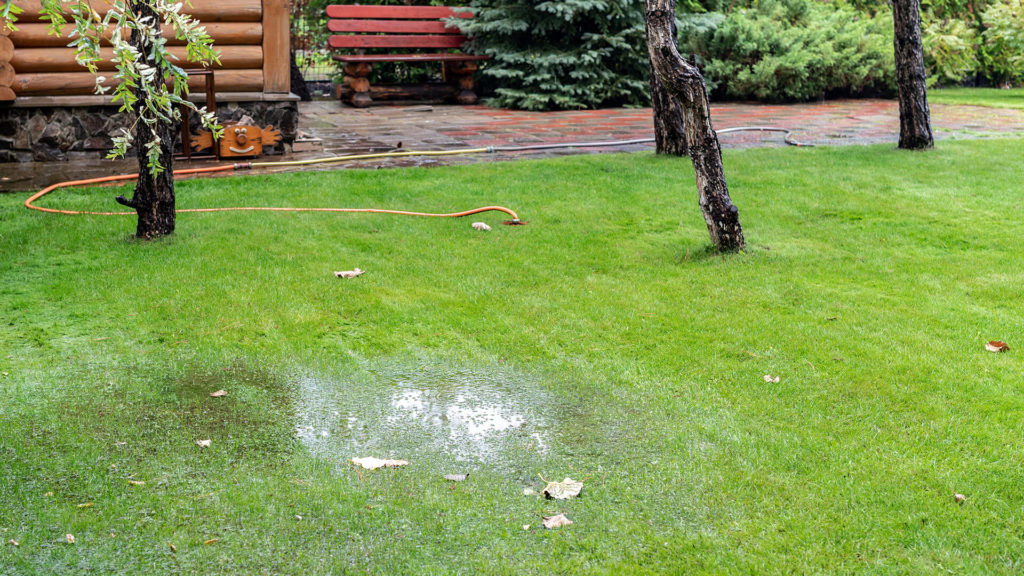
If the space is being used for a patio, gravel feature, shed pad, or walkway, the preparation should focus on a stable base. That may include removing soft material, adding compactable fill or aggregate, checking drainage, and levelling the area to the right height before the finished surface goes in.
Choosing Between Stump Removal & Grinding
Choose stump grinding if you only need the visible stump lowered and the area will not support anything sensitive to settling. Choose tree stump removal if you want the space properly prepared for new lawn, planting, patios, paths, retaining walls, gravel pads, sheds, or other landscaping work.
Before you commit to grinding, think about what you want that part of the yard to become in one, three, or five years. If you are investing in a finished outdoor space, tree stump removal and major root excavation now can prevent a lot of patching later. For help with tree stump removal, backfill, screened topsoil, and backyard site prep in Regina and surrounding communities, contact us to discuss the best way to prepare your site.