If you want to level a lawn with topsoil, start by figuring out why the lawn is uneven. Topsoil can fix shallow dips, mower-scalped spots, and small settled areas, but it cannot solve a drainage problem, a sinking trench, or a yard that slopes the wrong way. The safest approach is to add thin layers only where the grass can keep growing through the repair.
Can You Level a Lawn With Topsoil?
You can level a lawn with topsoil when the unevenness is shallow and the grass is still alive. A good candidate is a dip that is about 1/2 inch deep or less, a slightly rough surface caused by winter heaving, or a small depression where the mower drops and cuts the grass too short.
If the low spot is deep enough that adding soil would bury the grass completely, treat it as a larger repair. You may need to lift the sod, fill underneath, tamp gently, and relay the sod instead of spreading a thick layer over the blades.
Diagnose the Low Spot Before You Add Soil
Before you level a lawn with topsoil, check whether the low area is just cosmetic or connected to water movement. If water sits briefly after rain and then drains away, a light surface repair may be enough. If water remains for days, flows toward the house, or keeps returning to the same channel, the issue is more likely drainage or grading.
The City of Regina explains that good lot drainage should direct runoff away from homes and garages toward streets, landscaped areas, or drainage swales.
Match the Repair to the Lawn Problem
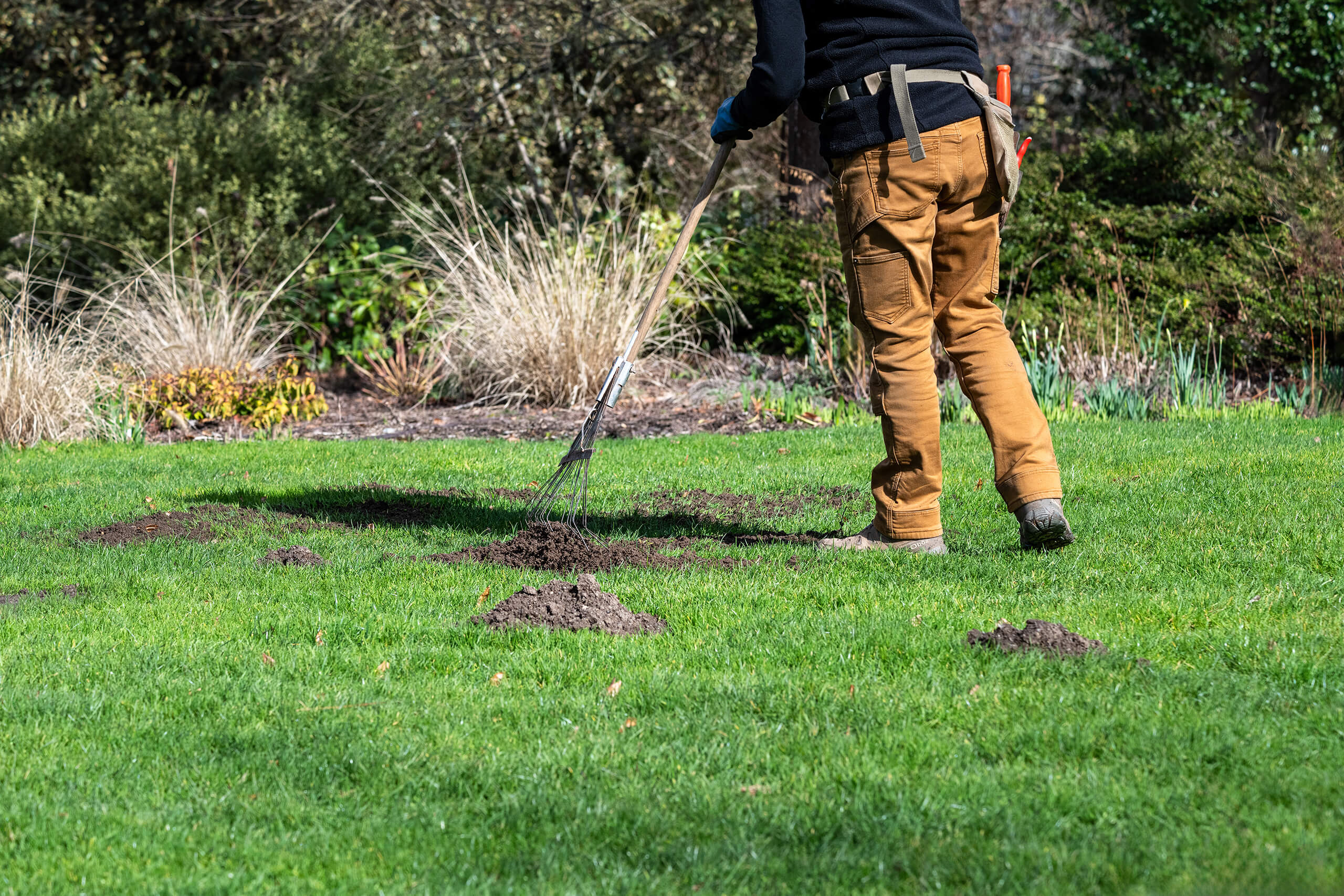
For shallow low spots, use screened topsoil and feather the edges into the surrounding turf. For mower scalping, the problem may be a high bump beside a low spot, so rake lightly, remove loose debris, and avoid creating a raised patch that the mower will scalp again.
For ruts, sunken utility trenches, or depressions left by removed tree roots, topsoil alone is usually not enough. Organic topsoil settles as it breaks down, so deeper fill work may need compactable material below the root zone and topsoil only near the surface.
How Much Topsoil Can Grass Handle?
To level a lawn with topsoil without killing the grass, keep each layer thin. A broad lawn surface usually handles about 1/4 inch at a time, while a small dip may handle up to 1/2 inch if the grass blades still show after raking.
Cornell University lists light topdressing applications at about 1/8 to 3/8 inch when seeding or overseeding, which is a useful range for avoiding heavy layers over living turf.
Use the Right Topsoil for Lawn Levelling
Screened topsoil is usually the best topsoil for lawn levelling because it spreads evenly and rakes between grass blades more easily than clumpy soil. Use it for shallow lawn repairs where you want a clean, workable material.
A topsoil manure mix can help when the lawn is thin and needs more organic matter, but it should be used lightly. Treat manure-enriched material as a soil amendment, not as bulk fill for deep holes.
How to Fill Low Spots in Lawn Areas
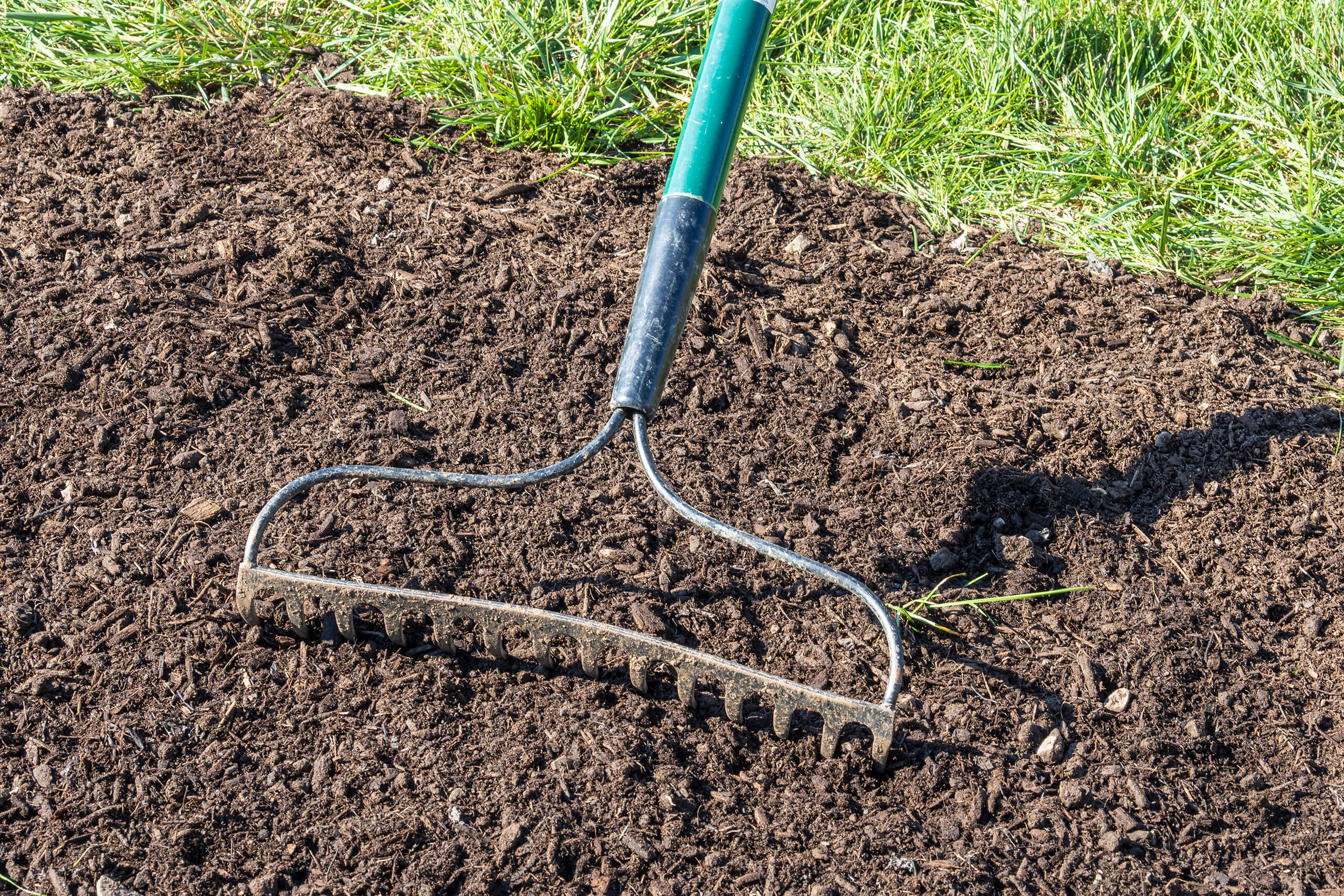
Mow the lawn a little shorter than usual, rake out thatch or debris, and mark the low spots while they are easy to see. Spread a small amount of dry screened topsoil into each dip, then use the back of a rake or a stiff broom to work it down between the blades.
After you fill low spots in lawn areas, water lightly to settle the material and check whether the grass is still visible. If the dip is still low, wait until the grass is actively growing again before adding another thin layer.
Should You Seed After Levelling?
If the grass is dense and healthy, you may not need seed. If the repair area is thin, bare, or scalped, overseed after the first light layer of topsoil, then rake just enough material over the seed to improve soil contact.
The University of Minnesota recommends about 1/4 inch of compost for lawn top-dressing, which reinforces the same principle: use a thin cover, not a heavy blanket.
What to Avoid When Levelling a Lawn
Do not level a lawn with topsoil by dumping a thick pile into a depression and walking away. That can block sunlight, trap moisture, and smother the grass before it grows through.
Avoid using wet clumps, unscreened soil, or straight sand across a heavy prairie lawn. Sand may be useful in small blended amounts for spot levelling, but it is not a cure for compacted or poorly drained soil.
When the Problem Is Bigger Than DIY Topsoil
If low spots keep coming back, the yard slopes toward the foundation, or a puddle follows the same path after every rain, the problem is bigger than a simple level lawn topsoil repair. In those cases, grading, drainage correction, or bobcat work may be the better long-term fix.
Serbu can help with topsoil, landscape material delivery, grading, and site preparation. Our fleet includes equipment for tight residential yards as well as larger properties, which makes it easier to match the repair to the scale of the lawn problem.

Summary
You can level a lawn with topsoil when the problem is shallow, the grass is alive, and the repair is applied in thin layers. Use screened topsoil for small dips, seed only where turf is thin, repeat light applications rather than burying grass, and call for grading help when water movement or deep settling points to a larger issue.