Filling a raised bed gets expensive fast if you rely on bagged soil for the whole project. A better approach is to use enough depth for roots, start with screened topsoil for structure, and add organic matter where it helps with nutrients and texture. Good raised bed soil should drain well, hold moisture evenly, and avoid becoming a soggy, compacted box by midsummer.
How Deep Should the Raised Bed Be?
For most vegetable and flower beds, 10 to 12 inches is a good minimum. If you are growing tomatoes, peppers, carrots, or larger plants, 12 to 18 inches is safer. A bed raised even 6 inches above grade can improve drainage.
What to Put in the Bottom
For most open-bottom beds, loosen the ground underneath and fill the bed with a consistent soil mix. Do not add a gravel layer inside the bed. Gravel takes up root space and can leave the soil above it wetter than expected. If rodents are a concern, line the bottom with hardware cloth before adding soil. It helps block burrowing pests while still letting water drain and roots access the ground below.
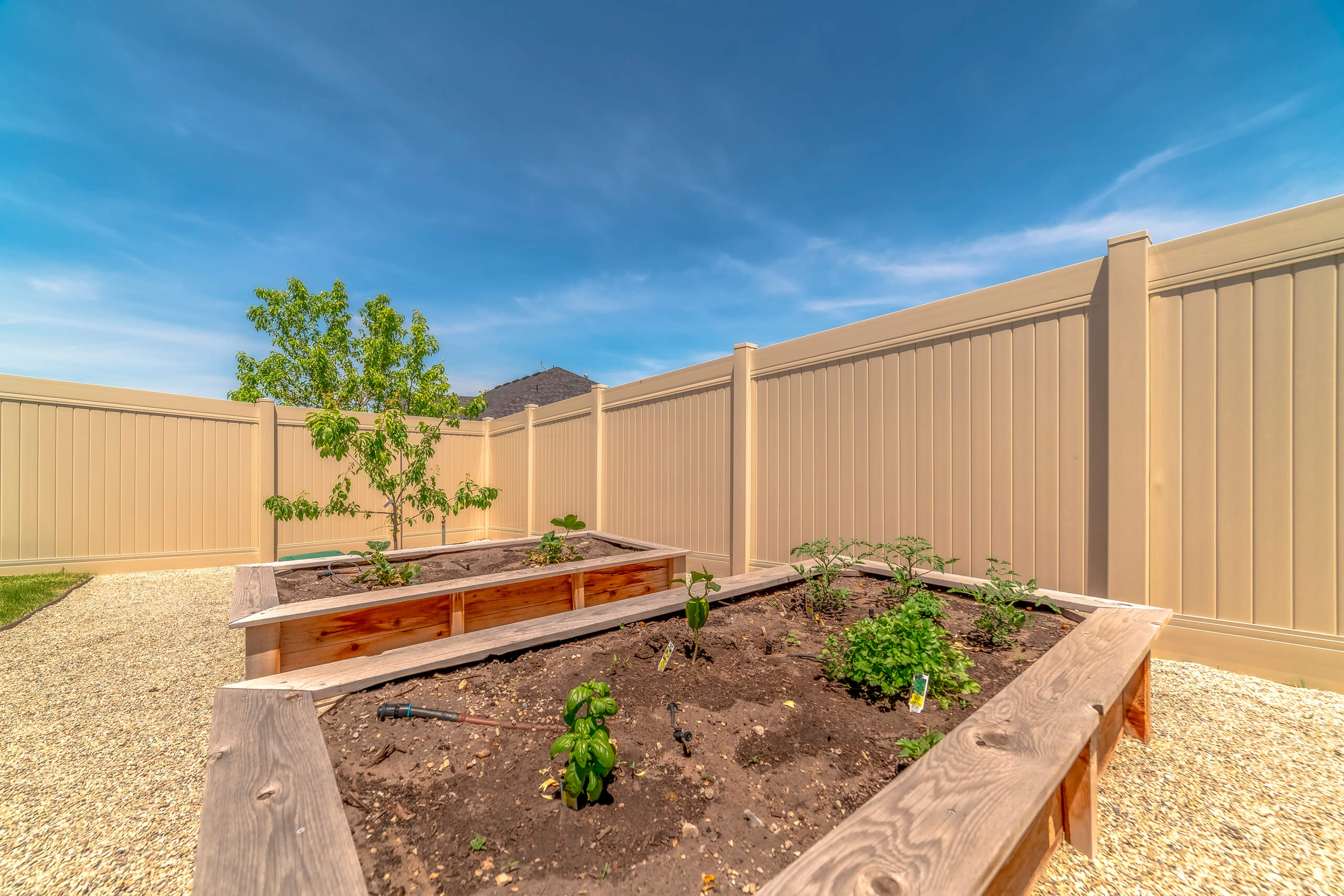
If your bed is already sitting on gravel, patio stone, or another hard surface, treat it like a deeper planter. Make sure the bed has enough soil depth and that excess water can drain out freely. In that case, the gravel is the base surface, not a drainage layer added inside the soil profile.
The Best Raised Bed Soil Mix
The best raised bed soil mix is usually a blend of topsoil and organic matter. Straight topsoil can be too dense, while straight manure or compost can settle too much, stay too wet, or become too rich. Composted manure also has a strong earthy smell, which is another reason it works better as part of a mix rather than the entire fill.
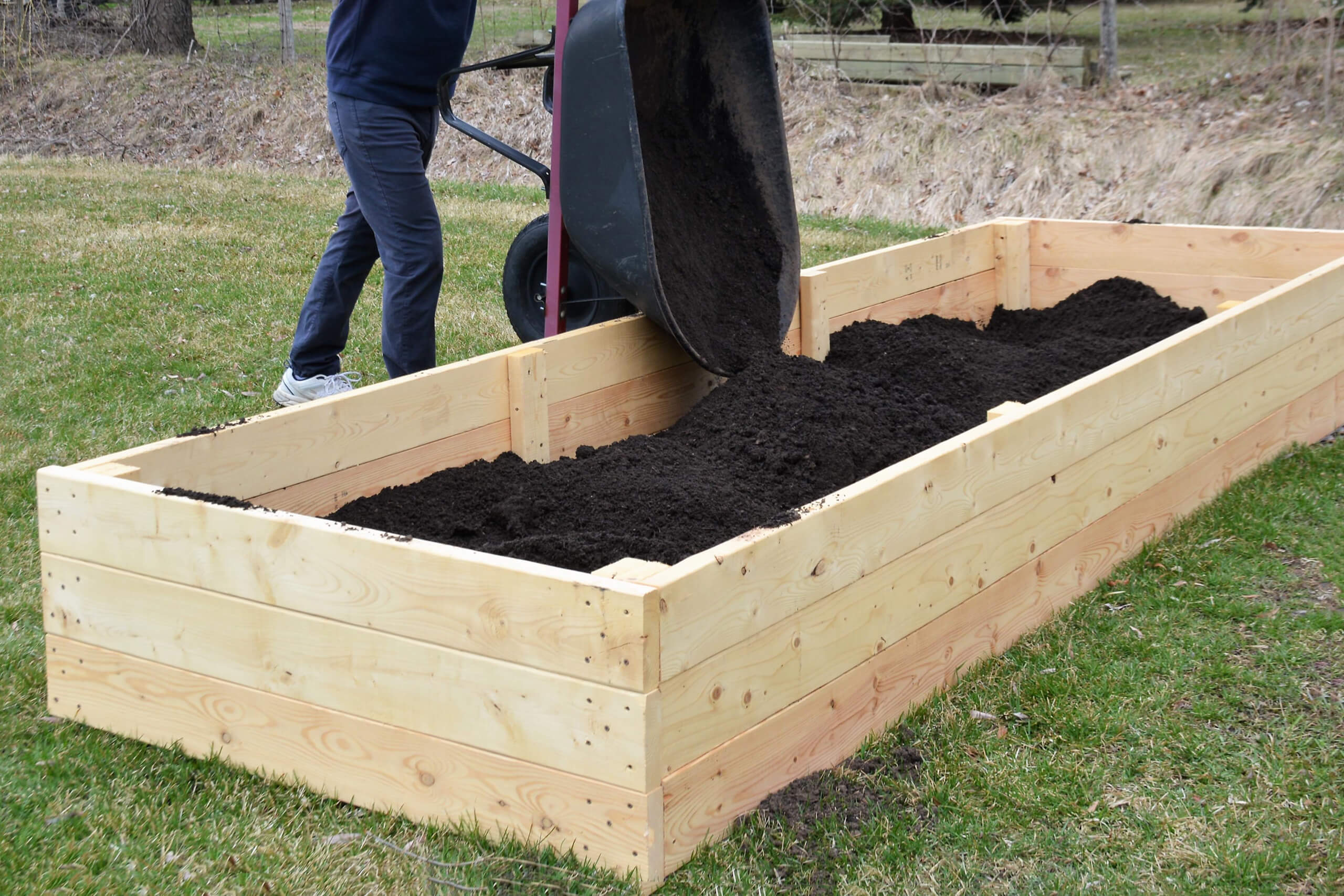
For most homeowners, a practical mix starts with screened topsoil for structure, then adds organic matter for fertility and texture. That is where topsoil manure mix can make sense, depending on what you are planting and how rich you want the bed to be.
Bulk Soil vs. Bags
Bagged soil is fine for a small planter, but it gets expensive fast in full-size beds. A 4-foot by 8-foot bed filled to 12 inches deep needs about 32 cubic feet of material, which works out to about 18 to 20 bags of 50-litre soil.
That is why bulk soil for raised beds often makes more sense. It usually costs less per yard, gives you a more consistent fill, and saves you from hauling and opening dozens of bags.
How to Avoid a Soggy Raised Bed
Most raised-bed failures come from using soil that is too heavy or too rich. If the mix is dense, layered badly, or overloaded with manure, roots can struggle for air and beds can stay wet too long.
Use screened material, mix the ingredients together instead of layering them sharply, and do not use straight manure as the main fill. That will give the bed better structure and make watering easier to manage.
Expect Some Settling
Fresh raised bed soil will settle. That is normal, especially when the mix contains compost or manure. That is another reason to start with a practical base instead of overspending on bagged mixes. Fill the bed properly, plant it, then top it up as needed over time.
A Smarter Way to Fill a Bed
If you want to save money without hurting plant growth, use enough depth, skip the gravel, and start with a balanced mix instead of random fill. For many homeowners, Serbu’s screened topsoil gives raised bed soil structure, while topsoil manure mix adds organic matter and nutrients. That is a practical way to build a bed that drains well, supports healthy roots, and does not cost more than it should. If you are building raised beds in Regina or nearby, Serbu can deliver bulk soil directly to your site, saving you the cost and hassle of hauling dozens of bags.